




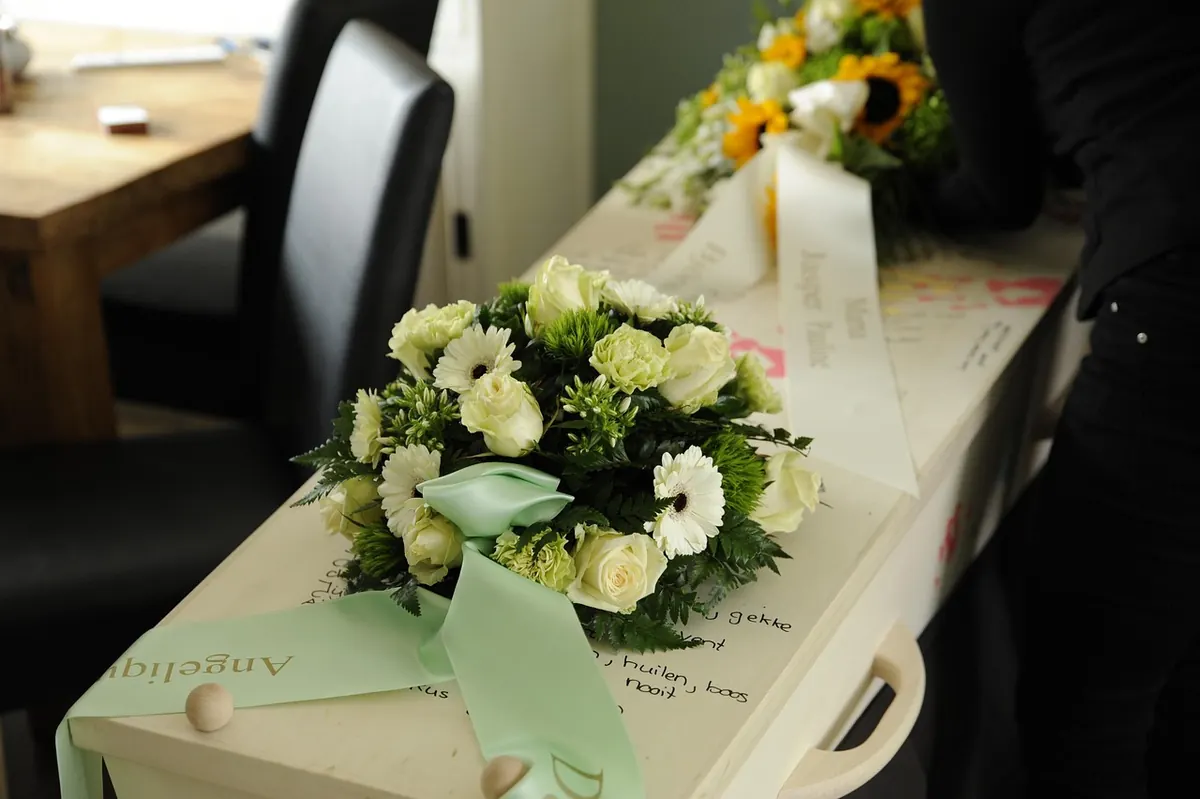
Somewhere in a drawer, or in the drafts folder of your mind, there is a condolence card you meant to send. Most of us put it off — not out of carelessness, but because the stakes feel unusually high. Whatever you write will be kept. It will be read more than once, and returned to in the years that follow. That is exactly why the card does not need to be eloquent. It needs to arrive, and it needs to sound like a person rather than a template.
This checklist is for the moment between hearing the news and putting the card in the postbox. Work through it in order, or skip to the part you are stuck on. The whole thing takes about fifteen minutes, plus a stamp.
Before You Write a Word
Two minutes of thinking saves a card. Ask yourself who will actually open the envelope. A colleague you mostly know from meetings needs something different from a close friend, and a sibling of the deceased needs something different again. Write to the person who will read it, not to an imaginary audience of other mourners.
Then ask what you know for certain. The name of the person who died, spelled correctly. Whether the death followed a long illness or came without warning. Whether the family has a faith, and whether you share it. If you are unsure about religious or cultural customs, keep the card warm and non-specific rather than guessing — or quietly ask someone close to the family.
A Structure That Holds Up
Sympathy cards go wrong when people try to resolve the grief instead of acknowledging it. A simple five-part structure keeps you steady:
- Say what happened, plainly. "I was so sorry to hear that your father died." Not "I heard about your situation." Naming the death shows you are not avoiding it.
- Use the name. "Margaret" or "your mother, Margaret" lands very differently from "your loss". If you knew her, add one concrete memory — a specific afternoon, a habit, something she said.
- Acknowledge the difficulty without explaining it. "This must be an unbearable few weeks" is enough. You are not required to make it better.
- Offer one specific thing. More on this below, because it is the part most people fumble.
- Close simply and sign. "Thinking of you and the children. Anna."
Three to five sentences is plenty for an acquaintance. If you knew the person who died well, a full card is fine, but keep the focus on them and on the bereaved, not on your own grief.
A short example: "Dear Ruth, I was so sorry to hear that David died. I worked alongside him for six years and never once saw him lose his temper, even on stocktake days. He talked about you and the boys constantly. I will bring dinner on Thursday evening and leave it on the step — no need to answer the door. With love, Anna and Peter."
Words That Help, Words That Hurt
There is no script, but some phrasing reliably lands well: "I'm so sorry." "I don't have the right words, but I'm thinking of you." "She was kind to me and I won't forget it." "I'm here, and I'll still be here in a few months."
Other phrases, however well meant, tend to close the conversation or imply the mourner is grieving wrongly. These are worth striking out on a second read:
- "At least…" At least she lived a long life, at least it was quick, at least you had him for forty years. Every "at least" quietly tells the person their sadness is misplaced.
- "Everything happens for a reason" or "It was God's plan." Only say this if you know for certain the recipient shares that belief. Otherwise it is theology delivered to someone who did not ask for it.
- "I know exactly how you feel." You do not, and the claim can sting. "I remember how raw it felt when my own mother died" is honest and offers company without competing.
- "Let me know if you need anything." Kind, but it hands the work back to someone with no energy to organise it.
- "How are you?" as the main content of the card. It invites a reassuring answer nobody has the strength to give.
- Graphic detail or curiosity. The card is not the place to ask what happened.
One more caution: a sentence of shared memory is a gift, a paragraph about your own loss is a burden. Keep the ratio firmly in favour of the bereaved.
Details People Forget
Choose a quiet card. A restrained design, a plain cream or grey stock, room for six or eight lines of your own handwriting. A jokey cover or a glittery butterfly is a gamble you do not need to take.
Write by hand, in dark ink, and leave a margin. Print the names of the deceased and of the bereaved carefully — misspelling a name in a condolence card is the kind of thing people remember. Sign with your full name and, if there is any chance you will not be recognised, your connection: "Rachel Adeyemi, your neighbour at number 14." Cards are often read weeks later, in a fog, by someone trying to work out who sent what.
Send it within a few weeks. Late is far better than never, and a brief line acknowledging the delay — "Forgive me for writing so late" — is entirely acceptable. If you are close to the family, a hand-delivered card or a note through the door is often kinder than post; it gives them the option of not answering.
Offer Something Concrete
The most useful sentence in a condolence card is usually the most specific one. Name a task and a time. Vague willingness evaporates; a dated offer can be accepted or declined without effort.
- "I'll bring a meal on Tuesday evening and leave it on the step."
- "I can drive you to the registrar's office — I'm free Thursday morning."
- "I'll take the dog out every morning this week."
- "I'm happy to help write the thank-you notes when you're ready."
- "I'll cover your shift on the 12th; it's already arranged."
And then repeat the offer later. The first fortnight brings a house full of people and a full fridge; the sixth week is often the emptier one. A second card, or a message in a month saying you are still thinking of them, is rarely unwelcome.
When the Death Is Hard to Talk About
Suicide, an overdose, the death of a child, a stillbirth, or the death of someone the bereaved had a complicated relationship with — these are the cards people most often fail to send, and the ones most needed. Keep the language plain and mirror the words the family uses. If they say "died", do not soften it to "lost". If they say nothing yet, stay general.
Do not search for a silver lining, do not speculate about causes, and do not ask for details. "I was so sorry to hear about Tom. I have no words, only affection for you and your family" is a complete and honourable card. Silence, in these situations, is heavier than an imperfect sentence.
A Last Look Before You Seal the Envelope
Read the card once more, slowly, as though you were the person opening it. Then check these six things:
- The card names the person who died, and the spelling is right.
- There is one specific memory or one specific offer of help.
- "At least", "everything happens for a reason" and "let me know if you need anything" have been removed.
- Your full name, and your connection if needed, is signed at the bottom.
- Nothing in it asks the bereaved to look after your feelings.
- You would be comfortable reading it aloud to them.
If a line makes you wince on the second read, cut it. What remains will be shorter, plainer, and better. Then post the card — the imperfect one that arrives on Thursday does far more good than the perfect one still sitting in the drawer.
Photo: keesluising / Pixabay
Related posts
More stories you’ll love reading